Phosphate crosslinking of gum Arabic with sodium trimetaphosphate as a sustainable biopolymer
Keywords:
Sodium trimetaphosphate, Gum Arabic, Chemical modification, Crosslinking, Thermal stabilityAbstract
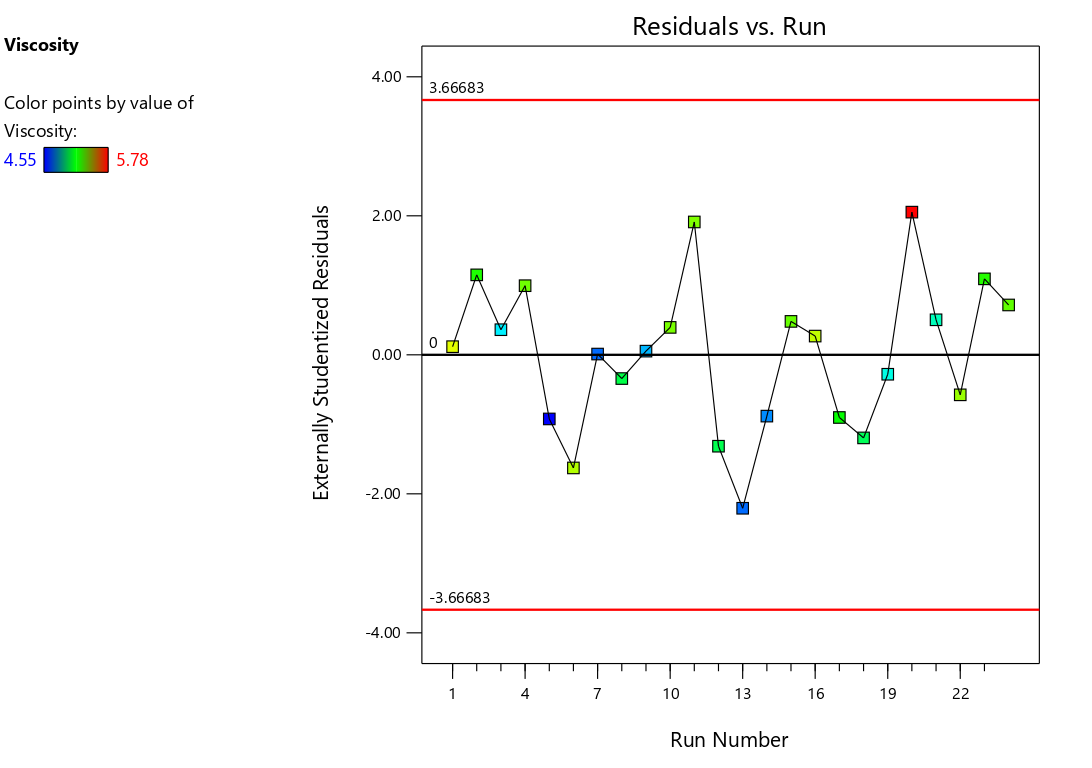
Gum Arabic (GA), a natural biopolymer, is highly hydrophilic and mechanically unstable, limiting some applications. This study investigates modification of GA using sodium trimetaphosphate (STMP) and changes in its physicochemical and thermal properties. A custom factorial design assessed STMP concentration (2 %, 5 %, and 8 %), pH (10, 11.5, and 13), and temperature (30, 40, and 50 °C), with viscosity and water absorption as responses. Analysis of variance (ANOVA) yielded an R2 of 0.7519 for the viscosity model and 0.5006 for water absorption. Conditions selected for viscosity were 8 % STMP, pH 13, and 40 °C, producing 4.56 cP (predicted: 4.601 cP) against a maximum of 6.25 cP. Conditions selected for water absorption were 2 % STMP, pH 11.5, and 40 °C, producing 17.85 % (predicted: 12.47 %) against a maximum of 32.57 %. Fourier transform infrared spectroscopy (FTIR) indicated phosphorylation and hydroxyl substitution through P--O--C and P=O stretching vibrations at 976 and 1256 cm−1, respectively. Thermogravimetric analysis (TGA) showed improved thermal stability in the viscosity-optimised sample, with a peak degradation temperature of 382 °C, degradation weight loss of 72.89 %, and residual mass of 23.47 %. This sample showed the most pronounced chemical modification and greatest thermal stability. STMP-crosslinked GA may serve as a sustainable, locally available biopolymer for concrete admixtures, drug-delivery encapsulation, and beverage stabilisers.
References
[1] M.A, Ashour, W. Fatima, M. Imran, M.M. Ghoneim, S. Alshehri & F.A. Shakeel, ``Review on the main phytoconstituents, traditional uses, inventions, and patent literature of gum Arabic emphasizing Acacia seyal'', Molecules 27 (2022) 1171. https://doi.org/10.3390/molecules27041171.
[2] N. Prasad, N. Thombare, S. C. Sharma & S. Kumar, ``Gum arabic -- A versatile natural gum: A review on production, processing, properties and applications'', Industrial Crops and Products 187 (2022) 115304. https://doi.org/10.1016/j.indcrop.2022.115304.
[3] L. E. Makar, N. Nady, A. Abd El-Fattah, N. Shawky & S.H. Kandil, ``Unmodified Gum Arabic/Chitosan/Nanohydroxyapatite nanocomposite hydrogels as potential scaffolds for bone regeneration'', Polymers 14 (2022) 3052. https://doi.org/10.3390/polym14153052.
[4] M. Nasir, A. B. M. Saiful Islam, K.S. Alotaibi & W. Al-Kutti, ``Evolution of Arabic gum-based green mortar towards enhancing the engineering properties -- Fresh, mechanical, and microstructural investigation'', Construction and Building Materials 365 (2023) 130025. https://doi.org/10.1016/j.conbuildmat.2022.130025.
[5] F. W. M. Ribeiro, L. S. Laurentino, C. R. Alves, M. S. R. Bastos, J. M. C. da Costa, K. M. Canuto & R. F. Furtado, ``Chemical modification of gum Arabic and its application in the Encapsulation of Cymbopogoncitratus Essential Oil'', Journal of Applied Polymer Science 132 (2015) 41519. https://doi.org/10.1002/app.41519.
[6] Y. Zhao, Z. Zheng, Y. Zhao, J. Chen & S. Tang, ``Cross-linked modification of tapioca starch by Sodium trimetaphosphate: An influence on its structure'', Food Chemistry: X 23 (2024) 101670. https://doi.org/10.1016/j.fochx.2024.101670.
[7] M. Abdrabuo, T. Hefnawy, A. Al-Khatib & L. El-Maghraby, ``Effect of cross-linking on some properties of corn starch'', Zagazig Journal of Agricultural Research 47 (2020) 1189. https://www.semanticscholar.org/paper/EFFECT-OF-CROSS-LINKING-ON-SOME-PROPERTIES-OF-CORN-Abdrabuo-Hefnawy/f4d14404faa7ba471c96cb3c2387d02339f6a9d4.
[8] L. Bouzouaid, B. Lothenbach, A. Fernandez-Martinez & C. Labbez, ``Portlandite solubility and Ca2+ activity in presence of gluconate and hexitols'', Cement and Concrete Research 149 (2021) 106563. https://theaspd.com/index.php/ijes/article/view/4055/2989.
[9] M.S. Hiremath, B. Lokeshappa, N.T. Shanmukha, K.H.S. Kumar & B. Spoorthi, ``Application of response surface methodology in the performance optimization of hybrid natural coagulants for turbidity removal'', International Journal of Environmental Sciences 11 (2025) 273. https://doi.org/10.64252/j2bxws93.
[10] Q. Zhang, C. Zhao, Z. Yin, R. Sun, Y. Zhao, N. Yang & S. Zhang, ``Response Surface Methodology in Experimental Design: A comprehensive review of its development, applications, and analytical techniques'', Scientific Journal of Technology 6 (2024) 5. https://doi.org/10.54691/sa0adp44.
[11] ASTM International, Standard practice for maintaining constant relative humidity by means of aqueous solutions, ASTM E104-20a (2020). https://doi.org/10.1520/E0104-20A.
[12] K. Bousnina, A. Hamza & Y.N. Ben, ``A combination of the particle swarm optimization-artificial neurons network algorithm and response surface method to optimize energy consumption and cost during milling of the 2017A alloy'', Energy Exploration & Exploitation 42 (2024) 727. https://doi.org/10.1177/01445987231217134.
[13] H. A. N. Søndergaard, H. R. Shaker & B. N. Jørgensen, ``Comments on the effects of variables' magnitude of process changes and standard deviations in “Adaptive multivariate statistical process control for monitoring time-varying processes”'', Industrial & Engineering Chemistry Research 63 (2024) 3349. https://doi.org/10.1021/acs.iecr.3c04417.
[14] D. C. Montgomery, Design and Analysis of Experiments, 10th ed., Wiley, United States, 2020, pp. 40--45. https://www.wiley.com/en-us/design-and-analysis-of-experiments-10th-edition-p-9781119722106.
[15] Stat-Ease, ``Adequate precision'', Stat-Ease (2025). https://www.statease.com/docs/v23.1/navigation/adequate-precision/.
[16] A. O. Sowunmi, V. E. Efeovbokhan, O. D. Orodu & B. A. Oni, ``Polyelectrolyte--nanocomposite for enhanced oil recovery: influence of nanoparticle on rheology, oil recovery and formation damage'', Journal of Petroleum Exploration and Production Technology 12 (2022) 493. https://doi.org/10.1007/s13202-021-01358-0.
[17] H. Cui, L. Ai, Z. Xiong, F. Xie, Z. Song & H. Zhang, ``Acid resistance of different polysaccharide hydrocolloids: pH effects'', Bioactive Carbohydrates and Dietary Fibre 32 (2024) 100458. https://doi.org/10.1016/j.bcdf.2024.100458.
[18] Y. Liu, Q. Pan, Z. Liang, J. Li & R. Wu, ``Preparation and Adsorption Properties of Sodium Trimetaphosphate crosslinked porous corn starch'', Biopolymers 116 (2025) e70004. https://doi.org/10.1002/bip.70004.
[19] P. Ramos & M. Broncel, ``Influence of storage conditions on the stability of gum Arabic and Tragacanth'', Molecules 27 (2022) 1510. https://doi.org/10.3390/molecules27051510.
[20] M. Cao, J. Gao, Y. Li, C. Liu, J. Shi, F. Ni, G. Ren & H. Xie, ``Complexation of $beta$-lactoglobulin with gum arabic: Effect of heat treatment and enhanced encapsulation efficiency'', Food Science & Nutrition 9 (2021) 1399. https://doi.org/10.1002/fsn3.2103.
[21] F. Kersten, D. Martin, U. S. van der Schaaf & D. Wefers, ``Gum Arabic -- same but different: Comparative analysis of structural characteristics and emulsifying properties of 20 Acacia senegal samples of various qualities'', Food Hydrocolloids 165 (2025) 111231. https://doi.org/10.1016/j.foodhyd.2025.111231.
[22] D. M. Bodjrenou, Z. Huang, T. Liu, B. Zheng & H. Zeng, ``Effects of crosslinking with sodium trimetaphosphate on structural, physicochemical, rheological and in vitro digestibility properties of purple sweet potato starch'', Food Research International 173 (2023) 113427. https://doi.org/10.1016/j.foodres.2023.113427.
[23] K. Noulis, T. Frangopoulos, A. Arampatzidou, L. Tsekmes, A. Marinopoulou, A. Goulas & V. Karageorgiou, ``Sodium Trimetaphosphate crosslinked starch films reinforced with Montmorillonite'', Polymers 15 (2023) 3540. https://doi.org/10.3390/polym15173540.
[24] K. Almonaityte, G. Cizauskaite, J. Bendoraitiene, L. Peciulyte & R. Rutkaite, ``Peculiarities of crosslinking degree determination for the starches of different botanical origin'', Starch - Stärke 73 (2021) 2100041. https://doi.org/10.1002/star.202100041.
[25] Stat-Ease Team, ``Putting a cap on encaps: Taming percentage data with the logit transformation'', Stat-Ease Team (2026). https://www.statease.com/blog/putting-a-cap-on-encaps-taming-percentage-data-with-the-logit-transformation/.
[26] btd, ``8 strategies for assessing residual independence in linear regression'', Medium (2023). https://baotramduong.medium.com/machine-learning-independence-assessment-d910a8e009c9.
[27] I. Parmar, S. Sharma & H.P.V. Rupasinghe, ``Optimization of $beta$-cyclodextrin-based flavonol extraction from apple pomace using response surface methodology'', Journal of Food Science and Technology 52 (2015) 2202. https://doi.org/10.1007/s13197-014-1282-1.
[28] S.A Mohamed, A. M. Elsherbini, H. R. Alrefaey, K. Adelrahman, A. Moustafa, N. M. Egodawaththa, K E. Crawford, N. Nesnas & S. A. Sabra, ``Gum Arabic: A commodity with versatile formulations and applications'', Nanomaterials 15 (2025) 290. https://doi.org/10.3390/nano15040290.
[29] C. Ai, C. Zhao, C. Xiang, Y. Zheng, S. Zhong, H. Teng & L. Chen, ``Gum arabic as a sole wall material for constructing nanoparticle to enhance the stability and bioavailability of curcumin'', Food Chemistry: X 18 (2023) 100724. https://doi.org/10.1016/j.fochx.2023.100724.
[30] Y. Tian, K. Qian, E. Jacobs, E. Amstad, D.S. Jones, L. Stella & G.P. Andrews, ``The investigation of Flory--Huggins interaction parameters for amorphous solid dispersion across the entire temperature and composition range'', Pharmaceutics 11 (2019) 420. https://doi.org/10.3390/pharmaceutics11080420.
[31] J. L. L. Teran, E.V Cabrera, J. Poveda, J. Araque & M. I. Beltrán, ``Improving the behavior of thermoplastic starch with the addition of gum Arabic: Antibacterial, mechanical properties and biodegradability'', Heliyon 10 (2024) e31856. https://doi.org/10.1016/j.heliyon.2024.e31856.
[32] M. K. Malik, V. Kumar, J. Singh, P. Bhatt, R. Dixit & S. Kumar, ``Phosphorylation of Alkali extracted Mandua starch by STPP/STMP for improving digestion resistibility'', ACS Omega 8 (2023) 11750. https://doi.org/10.1021/acsomega.2c05783.
[33] G. Ma, L. Wang, C. Hao, C. Du & H. Ma, ``Thermal and rheological performances evaluation of a modified biopolymer for fracturing fluid system'', Molecules 27 (2022) 7776. https://doi.org/10.3390/molecules27227776.
[34] M. Manimaran, M. Norizan, M. Kassim, M. Adam, M. Norrrahim & V. Knight, ``Critical assessment of the thermal stability and degradation of chemically functionalized nanocellulose-based polymer nanocomposites'', Nanotechnology Reviews 13 (2024) 20240005. https://doi.org/10.1515/ntrev-2024-0005.
Published
How to Cite
Issue
Section
Copyright (c) 2027 Chinedu Oti, Ruth A. Lafia-Araga, M. A. T. Suleiman, James B. Olawuyi, Abel Inobeme, Iliya Tanko (Author)

This work is licensed under a Creative Commons Attribution 4.0 International License.