An intuitionistic fuzzy Dombi–Archimedean RANCOM–AROMAN framework for AI-enabled telemedicine platform selection
Keywords:
Array, Array, Array, Array, ArrayAbstract
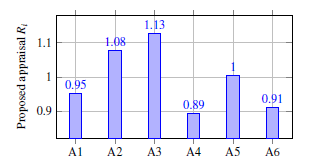
Artificial intelligence (AI)-enabled telemedicine platform selection involves multiple conflicting criteria and uncertain expert judgments. Conventional multi-criteria decision-making (MCDM) approaches often fail to preserve membership, non-membership, and hesitation throughout the complete decision process. Existing intuitionistic fuzzy Dombi models lack fully integrated aggregation, criterion weighting, dual-normalization fusion, and ranking mechanisms with rigorous endpoint treatment. This study develops a mathematically consistent and robust intuitionistic fuzzy Dombi--Archimedean (IFDA) decision framework that integrates IFDA--RANCOM--AROMAN to manage uncertain evaluations from criterion weighting to final ranking. IFDA--RANCOM determines criterion weights, whereas IFDA--AROMAN performs dual normalization, fuzzy fusion, benefit--cost utility construction, and alternative ranking. The framework is illustrated through the selection of six AI-enabled telemedicine platforms for rural healthcare. The obtained weights are omega = (0.36,0.28,0.20,0.12,0.04), and the baseline ranking is (A3 > A2 > A5 > A1 > A6 > A4). RANCOM--AROMAN reproduces the same complete ranking, while other methods confirm a similar leading group. The leading alternatives remain stable under parameter variations and ( ± 15%) criterion-weight perturbations. The framework provides a reproducible uncertainty-preserving decision mechanism. The proposed model offers a rigorous and robust tool for complex fuzzy decision-making applications.
References
[1] L. A. Zadeh, ``Fuzzy sets'', Information and Control 8 (1965) 338. https://doi.org/10.1016/S0019-9958(65)90241-X.
[2] K. T. Atanassov, ``Intuitionistic fuzzy sets'', Fuzzy Sets and Systems 20 (1986) 87. https://doi.org/10.1016/S0165-0114(86)80034-3.
[3] K. T. Atanassov, Intuitionistic Fuzzy Sets: Theory and Applications, Physica-Verlag, Heidelberg, Germany, 1999. https://doi.org/10.1007/978-3-7908-1870-3.
[4] E. Szmidt & J. Kacprzyk, ``Distances between intuitionistic fuzzy sets'', Fuzzy Sets and Systems 114 (2000) 505. https://doi.org/10.1016/S0165-0114(98)00244-9.
[5] R. R. Yager, ``On ordered weighted averaging aggregation operators in multicriteria decisionmaking'', IEEE Transactions on Systems, Man, and Cybernetics 18 (1988) 183. https://doi.org/10.1109/21.87068.
[6] Z. Xu & R. R. Yager, ``Some geometric aggregation operators based on intuitionistic fuzzy sets'', International Journal of General Systems 35 (2006) 417. https://doi.org/10.1080/03081070600574353.
[7] Z. Xu, ``Intuitionistic fuzzy aggregation operators'', IEEE Transactions on Fuzzy Systems 15 (2007) 1179. https://doi.org/10.1109/TFUZZ.2006.890678.
[8] W. Wang & X. Liu, ``Intuitionistic fuzzy geometric aggregation operators based on Einstein operations'', International Journal of Intelligent Systems 26 (2011) 1049. https://doi.org/10.1002/int.20498.
[9] W. Wang & X. Liu, ``Intuitionistic fuzzy information aggregation using Einstein operations'', IEEE Transactions on Fuzzy Systems 20 (2012) 923. https://doi.org/10.1109/TFUZZ.2012.2189405.
[10] J. Dombi, ``A general class of fuzzy operators, the De Morgan class of fuzzy operators and fuzziness measures induced by fuzzy operators'', Fuzzy Sets and Systems 8 (1982) 149. https://doi.org/10.1016/0165-0114(82)90005-7.
[11] E. P. Klement, R. Mesiar & E. Pap, Triangular Norms, Kluwer Academic Publishers, Dordrecht, Netherlands, 2000. https://doi.org/10.1007/978-94-015-9540-7.
[12] M. Grabisch, J.-L. Marichal, R. Mesiar & E. Pap, ``Conjunctive and disjunctive aggregation functions'', in Aggregation Functions, Cambridge University Press, Cambridge, UK, 2009, pp. 56--129. https://doi.org/10.1017/CBO9781139644150.
[13] P. Liu, J. Liu & S.-M. Chen, ``Some intuitionistic fuzzy Dombi Bonferroni mean operators and their application to multi-attribute group decision making'', Journal of the Operational Research Society 69 (2018) 1. https://doi.org/10.1057/s41274-017-0190-y.
[14] M. R. Seikh & U. Mandal, ``Intuitionistic fuzzy Dombi aggregation operators and their application to multiple attribute decision-making'', Granular Computing 6 (2021) 473. https://doi.org/10.1007/s41066-019-00209-y.
[15] C.-L. Hwang & K. Yoon, Multiple Attribute Decision Making: Methods and Applications, Springer, Berlin, Germany, 1981. https://doi.org/10.1007/978-3-642-48318-9.
[16] C.-T. Chen, ``Extensions of the TOPSIS for group decision-making under fuzzy environment'', Fuzzy Sets and Systems 114 (2000) 1. https://doi.org/10.1016/S0165-0114(97)00377-1.
[17] E. Triantaphyllou, Multi-Criteria Decision Making Methods: A Comparative Study, Kluwer Academic Publishers, Boston, USA, 2000. https://doi.org/10.1007/978-1-4757-3157-6.
[18] A. De Luca & S. Termini, ``A definition of a nonprobabilistic entropy in the setting of fuzzy sets theory'', Information and Control 20 (1972) 301. https://doi.org/10.1016/S0019-9958(72)90199-4.
[19] D. Diakoulaki, G. Mavrotas & L. Papayannakis, ``Determining objective weights in multiple criteria problems: The CRITIC method'', Computers & Operations Research 22 (1995) 763. https://doi.org/10.1016/0305-0548(94)00059-H.
[20] F. E. Boran, S. Genc{c}, M. Kurt & D. Akay, ``A multi-criteria intuitionistic fuzzy group decision making for supplier selection with TOPSIS method'', Expert Systems with Applications 36 (2009) 11363. https://doi.org/10.1016/j.eswa.2009.03.039.
[21] D.-F. Li, ``Multiattribute decision making models and methods using intuitionistic fuzzy sets'', Journal of Computer and System Sciences 70 (2005) 73. https://doi.org/10.1016/j.jcss.2004.06.002.
[22] A. Mardani, A. Jusoh, K. M. Nor, Z. Khalifah, N. Zakwan & A. Valipour, ``Multiple criteria decision-making techniques and their applications: A review of the literature from 2000 to 2014'', Economic Research-Ekonomska Istrav{z}ivanja 28 (2015) 516. https://doi.org/10.1080/1331677X.2015.1075139.
[23] P. A. Ejegwa, I. C. Onyeke, B. T. Terhemen, M. P. Onoja, A. Ogiji & C. U. Opeh, ``Modified Szmidt and Kacprzyk's intuitionistic fuzzy distances and their applications in decision-making'', Journal of the Nigerian Society of Physical Sciences 4 (2022) 174. https://doi.org/10.46481/jnsps.2022.530.
[24] R. Raza, A. T. A. Ghani & L. Abdullah, ``Extension of hesitant fuzzy weight geometric (HFWG)-VIKOR method under hesitant fuzzy information'', Journal of the Nigerian Society of Physical Sciences 6 (2024) 2157. https://doi.org/10.46481/jnsps.2024.2157.
[25] World Health Organization, Global Strategy on Digital Health 2020--2025, World Health Organization, Geneva, Switzerland, 2021. https://www.who.int/publications/i/item/9789240020924.
[26] World Health Organization, Ethics and Governance of Artificial Intelligence for Health: WHO Guidance, World Health Organization, Geneva, Switzerland, 2021. https://www.who.int/publications/i/item/9789240029200.
[27] C. Pascoe, S. Quinn & K. Scarfone, The NIST Cybersecurity Framework (CSF) 2.0, National Institute of Standards and Technology, Gaithersburg, USA, 2024. https://doi.org/10.6028/NIST.CSWP.29.
[28] B. Schweizer & A. Sklar, ``Statistical metric spaces'', Pacific Journal of Mathematics 10 (1960) 313. https://doi.org/10.2140/pjm.1960.10.313.
[29] T. Ganesh & P. R. S. Reddy, ``Testing the consistency of subjective weights in goal programming--the Analytical Hierarchy Process approach'', American Journal of Applied Mathematics and Statistics 2 (2014) 92. https://doi.org/10.12691/ajams-2-3-2.
[30] E. Szmidt & J. Kacprzyk, ``Entropy for intuitionistic fuzzy sets'', Fuzzy Sets and Systems 118 (2001) 467. https://doi.org/10.1016/S0165-0114(98)00402-3.
[31] H.-W. Liu & G.-J. Wang, ``Multi-criteria decision-making methods based on intuitionistic fuzzy sets'', European Journal of Operational Research 179 (2007) 220. https://doi.org/10.1016/j.ejor.2006.04.009.
[32] J. Ye, ``Multicriteria fuzzy decision-making method based on intuitionistic fuzzy weighted average'', Expert Systems with Applications 38 (2010) 916.
[33] H.-H. Zhao & H. Liu, ``Multiple classifiers fusion and CNN feature extraction for handwritten digits recognition'', Granular Computing 5 (2020) 411. https://doi.org/10.1007/s41066-019-00158-6.
[34] A. O. Bajeh, M. O. Olaoye, D. M. Mobolaji, F. E. Usman-Hamza, I. S. Olatinwo, P. O. Sadiku & A. B. Sakariyah, ``An adaptive neuro-fuzzy inference system for multinomial malware classification'', Journal of the Nigerian Society of Physical Sciences 7 (2025) 2172. https://doi.org/10.46481/jnsps.2025.2172.
[35] U. C. Obini, C. Jeremiah & S. A. Igwe, ``Development of a machine learning based fileless malware filter system for cyber-security'', Journal of the Nigerian Society of Physical Sciences 6 (2024) 2192. https://doi.org/10.46481/jnsps.2024.2192.
[36] A. E. Ibor, D. O. Egete, A. O. Otiko & D. U. Ashishie, ``Detecting network intrusions in cyber-physical systems using deep autoencoder-based dimensionality reduction approach and deep neural networks'', Journal of the Nigerian Society of Physical Sciences 7 (2025) 2689. https://doi.org/10.46481/jnsps.2025.2689.
[37] S. M. Shagari, D. Gabi, N. M. Dankolo & N. N. Gana, ``Countermeasure to Structured Query Language injection attack for web applications using hybrid logistic regression technique'', Journal of the Nigerian Society of Physical Sciences 4 (2022) 832. https://doi.org/10.46481/jnsps.2022.832.
[38] R. Hatamleh, ``On the form of correlation function for a class of nonstationary field with a zero spectrum'', Rocky Mountain Journal of Mathematics 33 (2003) 159. https://doi.org/10.1216/rmjm/1181069991.
[39] R. Hatamleh & V. A. Zolotarev, ``On two-dimensional model representations of one class of commuting operators'', Ukrainian Mathematical Journal 66 (2014) 122. https://doi.org/10.1007/s11253-014-0916-9.
[40] R. Hatamleh & V. A. Zolotarev, ``On model representations of non-selfadjoint operators with infinitely dimensional imaginary component'', Journal of Mathematical Physics, Analysis, Geometry 11 (2015) 174. https://doi.org/10.15407/mag11.02.174.
[41] R. Hatamleh & V. A. Zolotarev, ``Triangular models of commutative systems of linear operators close to unitary operators'', Ukrainian Mathematical Journal 68 (2016) 791. https://doi.org/10.1007/s11253-016-1258-6.
[42] A. S. Heilat, H. Zureigat, R. Hatamleh & B. Batiha, ``A new spline method for solving linear two-point boundary value problems'', European Journal of Pure and Applied Mathematics 14 (2021) 1283. https://doi.org/10.29020/nybg.ejpam.v14i4.4124.
[43] A. Qazza, I. Bendib, R. Hatamleh, R. Saadeh & A. Ouannas, ``Dynamics of the Gierer--Meinhardt reaction--diffusion system: Insights into finite-time stability and control strategies'', Partial Differential Equations in Applied Mathematics 14 (2025) 101142. https://doi.org/10.1016/j.padiff.2025.101142.
[44] T. Qawasmeh, A. Qazza, R. Hatamleh, M. W. Alomari & R. Saadeh, ``Further accurate numerical radius inequalities'', Axioms 12 (2023) 801. https://doi.org/10.3390/axioms12080801.
[45] A. Shihadeh, K. A. M. Matarneh, R. Hatamleh, M. O. Al-Qadri & A. Al-Husban, ``On the two-fold fuzzy $n$-refined neutrosophic rings for $2leq nleq 3$'', Neutrosophic Sets and Systems 68 (2024) 8. https://doi.org/10.5281/zenodo.11406449.
[46] J. Wik{e}ckowski, B. Kizielewicz, A. Shekhovtsov & W. Sa{l}abun, ``RANCOM: A novel approach to identifying criteria relevance based on inaccuracy expert judgments'', Engineering Applications of Artificial Intelligence 122 (2023) 106114. https://doi.org/10.1016/j.engappai.2023.106114.
[47] J. Wik{e}ckowski, B. Kizielewicz & W. Sa{l}abun, ``Fuzzy RANCOM: A novel approach for modeling uncertainty in decision-making processes'', Information Sciences 694 (2025) 121716. https://doi.org/10.1016/j.ins.2024.121716.
[48] S. Bov{s}kovi'c, L. v{S}vadlenka, S. Jovv{c}i'c, M. Dobrodolac, V. Simi'c & N. Bav{c}anin, ``An Alternative Ranking Order Method Accounting for Two-Step Normalization (AROMAN): A case study of the electric vehicle selection problem'', IEEE Access 11 (2023) 39496. https://doi.org/10.1109/ACCESS.2023.3265818.
[49] H. Xiang, H. M. A. Farid & M. Riaz, ``Linear programming-based fuzzy alternative ranking order method accounting for two-step normalization for comprehensive evaluation of digital economy development in provincial regions'', Axioms 13 (2024) 109. https://doi.org/10.3390/axioms13020109.
[50] G. C. Yalc{c}{i}n, K. Kara, A. Toygar, V. Simi'c, D. Pamuv{c}ar & N. K"oleou{g}lu, ``An intuitionistic fuzzy-based model for performance evaluation of EcoPorts'', Engineering Applications of Artificial Intelligence 126 (2023) 107192. https://doi.org/10.1016/j.engappai.2023.107192.
[51] A. F. Alrasheedi, A. R. Mishra, D. Pamuv{c}ar, S. Devi & F. Cavallaro, ``Interval-valued intuitionistic fuzzy AROMAN method and its application in sustainable wastewater treatment technology selection'', Journal of Intelligent & Fuzzy Systems 46 (2024) 7199. https://doi.org/10.3233/JIFS-236697.
[52] P. G"urol, S. Yurdabak, A. Y. G"ul & E. Cakmak, ``Pallet pooling service provider selection with an intuitionistic fuzzy-based AROMAN model'', Journal of Cleaner Production 498 (2025) 145189. https://doi.org/10.1016/j.jclepro.2025.145189.
Published
How to Cite
Issue
Section
Copyright (c) 2026 Haitham Qawaqneh, Abdallah Shihadeh, Wael Mahmoud Mohammad Salameh, Walid Abdelfattah, Ikhtesham Ullah, Arif Mehmood, Jamil J. Hamja, Celine Tali Malabong (Author)

This work is licensed under a Creative Commons Attribution 4.0 International License.