Entropy-regularized portfolio optimization and financial network entropy: diversification and concentration in a multi-asset ETF portfolio
Keywords:
Portfolio diversification, Shannon entropy, Minimum spanning tree, Financial networks, Exchange-traded fundsAbstract
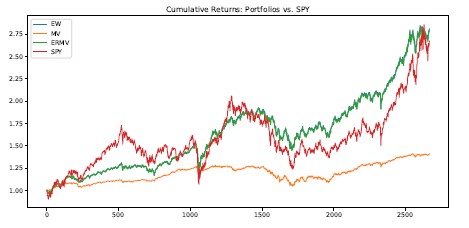
This study examines whether Shannon entropy regularization can mitigate the concentration associated with classical minimum-variance portfolio optimization while preserving risk-adjusted performance. Using a twelve-ETF global multi-asset universe covering equities, fixed income, precious metals, and real estate, we compare an equal-weight (EW) benchmark, a long-only fully invested minimum-variance (MV) portfolio, and an entropy-regularized minimum-variance (ERMV) portfolio. All portfolio aggregation, wealth compounding, and performance ratios use simple returns, with the risk-free rate expressed on the same basis. The MV optimizer allocates 61.87% to intermediate U.S. Treasury bonds (IEF) and 38.13% to high-yield corporate bonds (HYG), with effectively zero weight on the remaining assets. At λ = 0.01, the ERMV solution is close to equal weighting, with all twelve weights between 0.0828 and 0.0841. A sensitivity analysis over λ ∈ [10−5, 1] shows a systematic transition from concentration toward the maximum-entropy equal-weight allocation. Full-sample Sharpe ratios under a 4.5% annual risk-free rate are 0.2979 (EW) and 0.2966 (ERMV), and a circular block-bootstrap test indicates no statistically distinguishable difference. A rolling out-of-sample evaluation yields the same qualitative pattern. Correlation-based minimum spanning tree (MST) analysis reveals a core--periphery structure, while rolling spectral entropy identifies the March 2020 COVID-19 sell-off as the period of most concentrated cross-asset dependence. The findings position entropy regularization primarily as a concentration-control mechanism rather than a universal source of superior investment performance.
References
[1] R. Aggarwal & L. Schofield, ``The growth of global ETFs and regulatory challenges,'' Advances in Financial Economics 16 (2013) 77. https://doi.org/10.1108/S1569-3732(2013)0000016003.
[2] S. Smodis & S. Smore, ``Exchange traded fund risk management and resiliency,'' Journal of Risk Management in Financial Institutions 13 (2019) 59. https://doi.org/10.69554/TDRB5524.
[3] R. Dias, R. Galv~ao, M. Irfan, P. Alexandre, S. Gonc{c}alves & L. Almeida, ``Delving into the exchange-traded funds (ETFs) market: understanding market efficiency,'' Journal of Ecohumanism 3 (2024) 2670. https://doi.org/10.62754/joe.v3i4.3787.
[4] K. Saha, V. Madhavan & G. R. Chandrashekhar, ``Relative efficiency of equity ETFs: an adaptive market hypothesis perspective,'' Applied Economics Letters 28 (2021) 1202. https://doi.org/10.1080/13504851.2020.1804045.
[5] K. Bae & D. Kim, ``Liquidity risk and exchange-traded fund returns, variances, and tracking errors,'' Journal of Financial Economics 138 (2020) 222. https://doi.org/10.1016/j.jfineco.2019.02.012.
[6] A. Valadkhani & A. Moradi-Motlagh, ``An empirical analysis of exchange-traded funds in the US,'' Economic Analysis and Policy 78 (2023) 995. https://doi.org/10.1016/j.eap.2023.05.002.
[7] Z. Li & Y. Jiang, ``ETF connectedness and its applications: evidence from RCEP member countries,'' Journal of Multinational Financial Management 78 (2025) 100908. https://doi.org/10.1016/j.mulfin.2025.100908.
[8] R. Geng, H.-K. Zhang, Y. Gao & G. Yuan, ``Decoding global economic dynamic: a graph-based examination of contemporary ETF markets,'' Chaos, Solitons and Fractals 201 (2025) 117313. https://doi.org/10.1016/j.chaos.2025.117313.
[9] A. K. Tiwari, C. T. Albulescu & S.-M. Yoon, ``A multifractal detrended fluctuation analysis of financial market efficiency: comparison using Dow Jones sector ETF indices,'' Physica A 483 (2017) 182. https://doi.org/10.1016/j.physa.2017.05.007.
[10] H. Markowitz, ``Portfolio selection,'' Journal of Finance 7 (1952) 77. https://doi.org/10.1111/j.1540-6261.1952.tb01525.x.
[11] H.-S. Choi & D. Min, ``Efficiency of well-diversified portfolios: evidence from data envelopment analysis,'' Omega 73 (2017) 104. https://doi.org/10.1016/j.omega.2016.12.008.
[12] E. N. W. Aw, C. Carroll, D. Setola & H. Xie, ``How many securities should an active manager hold?'' Journal of Investing 32 (2023) 15. https://doi.org/10.3905/joi.2023.1.282.
[13] Y. Hou & M. Holmes, ``Do higher order moments of return distribution provide better decisions in minimum-variance hedging? Evidence from US stock index futures,'' Australian Journal of Management 45 (2020) 240. https://doi.org/10.1177/0312896219879974.
[14] P. Ehling & S. B. Ramos, ``Geographic versus industry diversification: constraints matter,'' Journal of Empirical Finance 13 (2006) 396. https://doi.org/10.1016/j.jempfin.2006.04.001.
[15] G. Pola, ``On entropy and portfolio diversification,'' Journal of Asset Management 17 (2016) 218. https://doi.org/10.1057/jam.2016.10.
[16] J.-R. Yu, W.-Y. Lee & W.-J. P. Chiou, ``Diversified portfolios with different entropy measures,'' Applied Mathematics and Computation 241 (2014) 47. https://doi.org/10.1016/j.amc.2014.04.006.
[17] X. Deng, T. Lin & C. Chen, ``Comparison and research on diversified portfolios with several entropy measures based on different psychological states,'' Entropy 22 (2020) 1125. https://doi.org/10.3390/e22101125.
[18] L. Batra & H. C. Taneja, ``Portfolio optimization based on generalized information theoretic measures,'' Communications in Statistics -- Theory and Methods 51 (2022) 6367. https://doi.org/10.1080/03610926.2020.1861294.
[19] M. Bajo Traver, ``Enhancing diversification in fixed-income portfolios: an entropy-based optimization framework,'' Journal of Asset Management 26 (2025) 863. https://doi.org/10.1057/s41260-025-00428-w.
[20] P. J. Mercurio, Y. Wu & H. Xie, ``Portfolio optimization for binary options based on relative entropy,'' Entropy 22 (2020) 752. https://doi.org/10.3390/e22070752.
[21] F. Pozzi, T. Di Matteo & T. Aste, ``Spread of risk across financial markets: better to invest in the peripheries,'' Scientific Reports 3 (2013) 1665. https://doi.org/10.1038/srep01665.
[22] Y. Tang, J. J. Xiong, Z.-Y. Jia & Y.-C. Zhang, ``Complexities in financial network topological dynamics: modeling of emerging and developed stock markets,'' Complexity 2018 (2018) 4680140. https://doi.org/10.1155/2018/4680140.
[23] A. Pallotta & V. Ciciretti, ``Adaptive market anomaly detection (AMAD): enhancing minimum spanning tree stability in financial networks,'' Finance Research Letters 85 (2025) 107997. https://doi.org/10.1016/j.frl.2025.107997.
[24] A. A. Dellow, M. Ismail, H. Bahaludin & F. A. Razak, ``Comparing the impacts of past major events on the network topology structure of the Malaysian consumer products and services sector,'' Journal of the Knowledge Economy 16 (2025) 925. https://doi.org/10.1007/s13132-024-02038-0.
[25] Y. Berouaga, M. Bouchekourte, C. El Msiyah & J. Madkour, ``Dynamic portfolios via triangulated maximally filtered graph networks: a centrality-driven multi-strategy approach,'' Cogent Business and Management 13 (2026) 2638724. https://doi.org/10.1080/23311975.2026.2638724.
[26] M. O. Jackson & A. Pernoud, ``Optimal regulation and investment incentives in financial networks,'' Journal of Public Economics 252 (2025) 105516. https://doi.org/10.1016/j.jpubeco.2025.105516.
[27] C. Yan, Y. Ding, W. Liu, X. Liu & J. Liu, ``Multilayer interbank networks and systemic risk propagation: evidence from China,'' Physica A 628 (2023) 129144. https://doi.org/10.1016/j.physa.2023.129144.
[28] D. Lee & H. Park, ``Measuring global financial linkages: a network entropy approach,'' Sustainability 11 (2019) 4691. https://doi.org/10.3390/su11174691.
[29] c{C}. S"ozen, ``Stress-aware multiscale spillover networks: cross-market transmission via coherence-entropy centrality,'' AIMS Mathematics 10 (2025) 26313. https://doi.org/10.3934/math.20251157.
[30] A. Sioofy Khoojine, L. Xiao, M. Shadabfar, G. Zhao & Z. Wang, ``A mutual information-based Graph-VARX network analysis of global risk spillovers in the Chinese equity market,'' Open Physics 24 (2026) 20250274. https://doi.org/10.1515/phys-2025-0274.
[31] I. Choi & W. C. Kim, ``A multifaceted graph-wise network analysis of sector-based financial instruments' price-based discrepancies with diverse statistical interdependencies,'' North American Journal of Economics and Finance 75 (2025) 102316. https://doi.org/10.1016/j.naecf.2024.102316.
[32] J. Xu & Y. Li, ``Mapping cross-market tail spillovers: a multilayer LASSO-quantile network approach,'' Systems 14 (2026) 394. https://doi.org/10.3390/systems14040394.
[33] Y. Kitamura & M. Stutzer, ``Connections between entropic and linear projections in asset pricing estimation,'' Journal of Econometrics 107 (2002) 159. https://doi.org/10.1016/S0304-4076(01)00118-X.
[34] F. c{S}erban & S. Dedu, ``Maximizing portfolio diversification via weighted Shannon entropy: application to the cryptocurrency market,'' Risks 13 (2025) 253. https://doi.org/10.3390/risks13120253.
[35] S. Dedu & F. c{S}erban, ``Entropy-based portfolio optimization in cryptocurrency markets: a unified maximum entropy framework,'' Entropy 28 (2026) 285. https://doi.org/10.3390/e28030285.
[36] A. Khosravi & S. J. Sadjadi, ``A multi-period robust portfolio optimization framework using Yager's entropy,'' PLOS ONE 21 (2026) e0332725. https://doi.org/10.1371/journal.pone.0332725.
[37] H. Zhao, H. Ahmadzade & M. GhasemiGol, ``Tsallis entropy of uncertain sets and its application to portfolio allocation,'' Journal of Industrial and Management Optimization 20 (2024) 2885. https://doi.org/10.3934/jimo.2024032.
[38] S. Gaied Chortane & K. Naoui, ``The end of mean-variance? Tsallis entropy revolutionises portfolio optimisation in cryptocurrencies,'' Journal of Risk and Financial Management 18 (2025) 77. https://doi.org/10.3390/jrfm18020077.
[39] O. M. Ardakani, ``Portfolio optimization with transfer entropy constraints,'' International Review of Financial Analysis 96 (2024) 103644. https://doi.org/10.1016/j.irfa.2024.103644.
[40] M. N. Sheikh & R. M. Rahman, Entropy regularization and tradeoff strategies for policy gradient agent recommendation in Dhaka Stock Exchange market, 2025 IEEE/ACIS 29th International Conference on Software Engineering, Artificial Intelligence, Networking and Parallel/Distributed Computing (SNPD), Busan, South Korea, 2025, pp. 848--855. https://doi.org/10.1109/SNPD65828.2025.11252555.
[41] X. Yan, H. Yang, C. Hou, S. Zhang & P. Zhu, ``Portfolio optimization by price-to-earnings ratio network analysis,'' International Journal of Modern Physics B 36 (2022) 2250107. https://doi.org/10.1142/S0217979222501077.
[42] N. Magner, J. F. Lav'in & M. A. Valle, ``Modeling synchronization risk among sustainable exchange trade funds: a statistical and network analysis approach,'' Mathematics 10 (2022) 3598. https://doi.org/10.3390/math10193598.
[43] L. Cappiello, R. F. Engle & K. Sheppard, ``Asymmetric dynamics in the correlations of global equity and bond returns,'' Journal of Financial Econometrics 4 (2006) 537. https://doi.org/10.1093/jjfinec/nbl005.
[44] M. Antar, R. Hassan & R. Amami, ``Analyzing diversification opportunities among top-performing ETFs: a multi-wavelet and MGARCH-DCC approach,'' Journal of Risk Finance 26 (2025) 653. https://doi.org/10.1108/JRF-11-2024-0376.
[45] R. Katoch & H. Gupta, ``Can traditional ETFs enhance portfolio diversification alongside thematic funds? Insights from market turbulences,'' Global Business Review (2026). https://doi.org/10.1177/09721509261422077.
[46] H. R. Bhapkar, R. U. Shaban, S. A. Mir & J. Nisar, ``A novel approach for constructing a minimum spanning tree,'' Journal of the Nigerian Society of Physical Sciences 8 (2026) 3739. https://doi.org/10.46481/jnsps.2026.3739.
Published
How to Cite
Issue
Section
Copyright (c) 2027 Dilawar Ahmad Bhat, Sajad Ahmad Sheikh, Manzoor Ahmad Khanday (Author)

This work is licensed under a Creative Commons Attribution 4.0 International License.