Volume 2, Issue 3, August 2020

A defining feature of scientific progress is the continuous refinement of the methods through which problems are investigated. In mathematics, this may involve developing new analytical techniques or improving the stability and accuracy of numerical algorithms. In experimental physics, progress often depends on increasingly precise measurements and the ability to distinguish physical phenomena that were previously difficult to resolve. In the earth and environmental sciences, reliable observations and mathematical models provide the basis for understanding natural resources and changes in environmental conditions. These different forms of investigation are represented in Volume 2, Issue 3 of the Journal of the Nigerian Society of Physical Sciences (JNSPS).
This issue brings together twelve original research articles spanning pure and applied mathematics, numerical analysis, nuclear physics, mass spectrometry, geophysics, climate modelling, materials processing, and mathematical finance. The range of contributions reflects the multidisciplinary scope of the journal and provides an opportunity to consider how scientific methods developed within one discipline may contribute to understanding problems in another.
Mathematical analysis occupies a prominent position in this issue, particularly through investigations of differential equations, optimisation problems, and numerical approximation. These subjects remain fundamental to scientific research because many physical and economic processes are described by equations whose solutions require careful mathematical treatment.
In A Purusit Differential Game Problem on a Closed Convex Subset of a Hilbert Space, Badakaya and Muhammad investigate a pursuit differential game involving several pursuers and a single evader within a closed convex subset of a Hilbert space. Differential game theory provides a mathematical framework for analysing situations in which the behaviour of one participant depends on the actions of others. The formulation of such problems in abstract spaces extends their mathematical treatment beyond conventional finite-dimensional settings. This contribution illustrates the continuing relevance of functional analysis and differential equations to the study of dynamic interactions and mathematical control problems.
The development of numerical methods constitutes another major theme. Fadugba, Ogunyebi and Falodun, in An Examination of a Second Order Numerical Method for Solving Initial Value Problems, investigate a numerical technique for approximating solutions of ordinary differential equations. The reliability of numerical solutions depends on several considerations, including the consistency, convergence, and stability of the algorithm. The study contributes to the evaluation of numerical procedures for initial value problems and reinforces the importance of examining the mathematical properties of computational methods before applying them to practical models.
Related questions arise when differential equations contain singular terms or exhibit behaviour that challenges conventional integration techniques. Ogunniran and colleagues address this concern in Linear Stability Analysis of Runge-Kutta Methods for Singular Lane-Emden Equations. Their investigation examines the stability characteristics of Runge-Kutta methods in the treatment of singular Lane-Emden equations. Such equations arise in several areas of applied mathematics and mathematical physics, including models involving radial symmetry. The work emphasises that the effectiveness of a numerical method cannot be judged solely by its order of accuracy; its stability properties must also be considered.
A complementary approach is presented by Uwaheren and colleagues in Perturbed Collocation Method For Solving Singular Multi-order Fractional Differential Equations of Lane-Emden Type. The authors consider a class of fractional differential equations involving singularities and employ a perturbed collocation procedure to construct approximate solutions. Fractional differential equations extend the mathematical description of dynamical systems beyond integer-order derivatives, while collocation methods provide a systematic approach to numerical approximation. Their combination offers another direction for investigating mathematical models that may be difficult to solve using conventional analytical techniques.
The numerical analysis contributions are further strengthened by L-Stable Block Hybrid Numerical Algorithm for First-Order Ordinary Differential Equations, in which Akinnukawe and Muka develop an L-stable block hybrid multistep method. L-stability is particularly relevant when solving stiff differential equations because it concerns the numerical treatment of strongly decaying solution components. The proposed algorithm contributes to the development of computational techniques intended to provide reliable approximations under demanding numerical conditions.
These studies collectively demonstrate that numerical mathematics is not simply concerned with producing approximate answers. Its deeper objective is to establish methods whose mathematical properties justify confidence in the computed results. Accuracy, convergence, and stability are essential considerations, particularly where numerical predictions are subsequently used to interpret physical processes or support practical decisions.
Beyond mathematical analysis, this issue includes experimental investigations in nuclear physics and precision measurement. Daniel and McAsule, in Measurement of the Excited Energies Identified in 42Ca using the ROSPHERE Gamma-ray Arrays, investigate excited nuclear energy levels associated with calcium-42 using gamma-ray detection techniques. Nuclear spectroscopy provides important information about the energy structure of atomic nuclei and the transitions between excited states. The use of gamma-ray detector arrays enables researchers to identify and examine radiation associated with nuclear processes. This contribution illustrates the importance of experimental measurements in improving our understanding of nuclear structure.
Another investigation concerned with precision measurements is presented by Dyavappa in The Mass Resolution of Ca, K Isotopes and CO, N2 and C2H4 Isobars in Isotopes Separator On-Line trap Mass spectrometry. The study examines mass resolution in an isotope separator on-line trap system, considering selected isotopes and isobars. Accurate mass separation is essential in experiments where species with closely related mass-to-charge ratios must be distinguished. The investigation highlights the relationship between ion trapping, cyclotron-frequency measurements, and the precision required for reliable mass spectrometric analysis.
The inclusion of these experimental studies alongside mathematical contributions reflects an important relationship in the physical sciences. Mathematical models provide descriptions of physical systems, but experimental measurements are required to investigate their properties and test theoretical expectations. Similarly, the interpretation of experimental observations often depends on mathematical and computational methods. Progress in either direction can therefore support developments in the other.
Environmental investigations constitute another important component of this issue. Climate variability and groundwater availability are subjects of considerable scientific and practical relevance, particularly in regions where environmental conditions influence agriculture, water supply, and economic activities.
In Modelling and Forecasting Climate Time Series with State-Space Model, Adedotun and colleagues investigate climatic observations using a state-space modelling framework. Climate records often exhibit temporal variation, changing trends, and statistical dependence that require appropriate mathematical descriptions. State-space models provide a framework for representing observed data through underlying processes and measurement relationships. The study demonstrates the application of statistical modelling to the analysis and forecasting of climate-related time series.
Groundwater exploration is addressed in Evaluation of Aquifer Protective Capacity and Groundwater Potential in Part of Iju, Akure-North, Ondo State, Nigeria, by Olajide and colleagues. The authors employ integrated geophysical methods to investigate groundwater potential and the protective characteristics of subsurface formations. Understanding aquifer conditions is important not only for identifying potential groundwater resources but also for assessing their vulnerability to contamination. This work illustrates the role of geophysical investigation in supporting groundwater development and environmental assessment.
The practical relevance of scientific research is equally evident in the study of naturally occurring materials. Olaoluwa and colleagues, in Dissolution of a Nigerian sourced Muscovite ore for use as an ingredient in paint production, examine the dissolution and purification of muscovite ore using hydrochloric acid. The investigation considers processing conditions relevant to obtaining a material suitable for industrial applications. Research on locally available mineral resources is important because the properties and quality of raw materials influence their suitability for manufacturing processes. The study contributes to the scientific assessment of mineral processing methods and their potential industrial relevance.
Three further articles address mathematical approaches to financial decision-making, with particular attention to investment strategy, pension management, inflation, and uncertainty in financial markets.
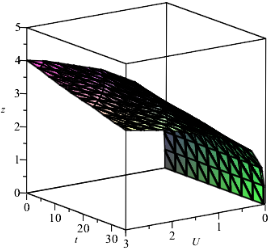
Osu and colleagues, in On the Investment Strategy, Effect of Inflation and Impact of Hedging on Pension Wealth during Accumulation and Distribution Phases, examine investment decisions associated with pension wealth over different stages of financial planning. Pension management presents a long-term optimisation problem in which accumulated contributions, investment returns, inflation, and financial risks must be considered. The study contributes to the mathematical analysis of pension investment strategies and the factors that influence wealth accumulation and distribution.
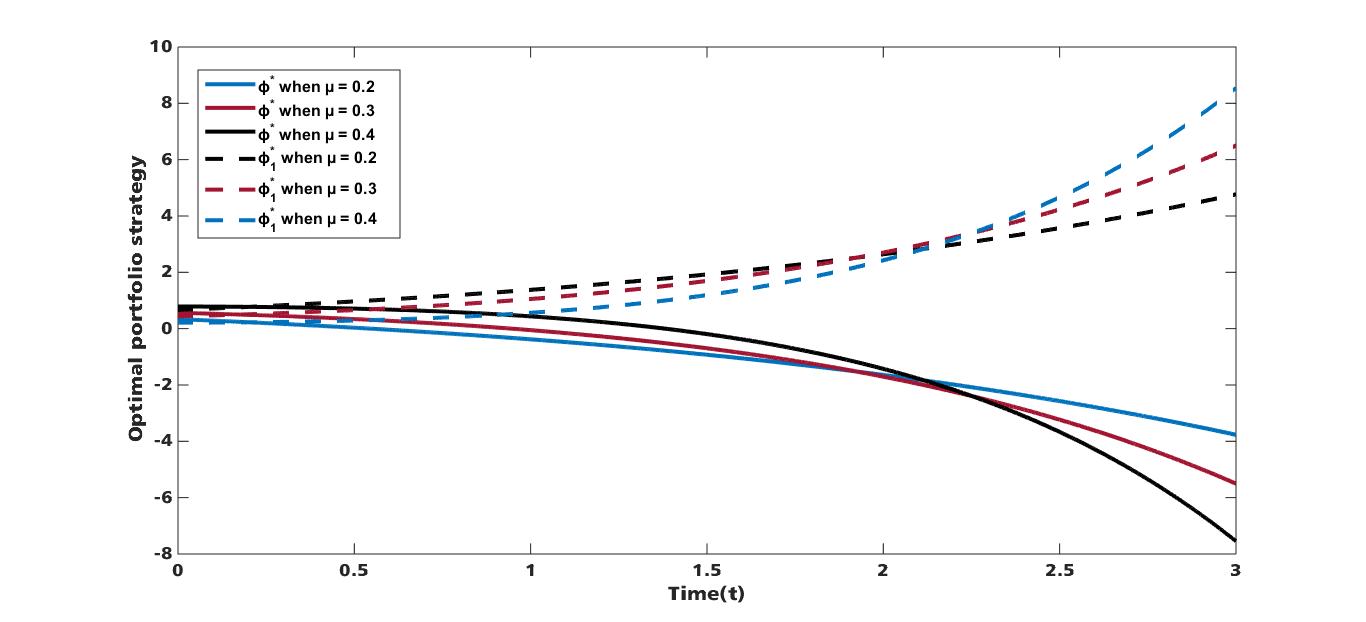
In a related contribution, Akpanibah and Ini investigate Portfolio Strategy for an Investor with Logarithm Utility and Stochastic Interest Rate under Constant Elasticity of Variance Model. Their work considers the optimisation of an investor's terminal wealth under a mathematical framework involving stochastic interest rates and a constant elasticity of variance model. Stochastic financial models provide a means of incorporating uncertainty into investment decisions, while utility functions represent preferences concerning financial outcomes. The study demonstrates the relevance of stochastic calculus and optimisation theory to financial mathematics.
The presence of these financial investigations within a multidisciplinary scientific journal is consistent with the broad applicability of mathematics. Techniques developed in probability theory, differential equations, and optimisation can be applied to problems in which uncertainty and dynamic behaviour play important roles. Their scientific value rests on the validity of the mathematical formulation, the assumptions adopted, and the extent to which the resulting analysis addresses the stated problem.
An important characteristic of the present issue is the balance between methodological development and practical application. Several contributions are concerned primarily with establishing or improving mathematical techniques, while others employ scientific methods to investigate nuclear properties, environmental conditions, industrial materials, or financial systems. This diversity is valuable because fundamental methodological research and application-driven investigations support different stages of scientific advancement.
The publication of this issue also comes at a time when the global research community continues to experience disruptions associated with the COVID-19 pandemic. During this period, access to experimental facilities, field locations, and conventional academic activities has been restricted in many institutions. Nevertheless, the scientific community has continued to demonstrate the importance of research collaboration and the exchange of reliable scientific information.
For JNSPS, these circumstances reinforce the need for a publication process that remains committed to scientific quality. The development of new theories and numerical methods requires careful verification, just as experimental and observational investigations require dependable measurements and appropriate interpretation. Editorial assessment must therefore remain centred on originality, methodological soundness, and the validity of reported findings.
As the journal continues its second year of publication, we intend to strengthen its role as a platform for researchers working across the mathematical and physical sciences. The publication of twelve original research articles in this issue reflects the breadth of contributions that can emerge from different scientific disciplines. However, the long-term development of the journal must continue to be guided by research quality rather than publication volume alone.
I acknowledge the authors for their contributions and the reviewers for providing the critical assessments necessary to support responsible scholarly publishing. The efforts of the editorial team and the continued support of the Nigerian Society of Physical Sciences are equally appreciated.
The contributions in this issue demonstrate that scientific progress is not confined to a particular discipline or method. It emerges through the development of mathematical ideas, the refinement of experimental techniques, and the application of reliable scientific approaches to problems of theoretical and practical significance. Our continuing responsibility is to provide a credible platform through which such contributions can be examined, communicated, and developed further.
B. J. Falaye
Editor-in-Chief, Journal of the Nigerian Society of Physical Sciences
July 31, 2020
Original Research
-
 1240 649 Cited —
We study a pursuit differential game problem with finite number of pursuers and one evader on a nonempty closed convex subset of the Hilbert space l2. Players move according to certain …
-
 1742 788 Cited —
This paper presents an examination of a Second Order Convergence Numerical Method (SOCNM) for solving Initial Value Problems (IVPs) in Ordinary Differential Equations (ODEs). The SOCNM has been derived via …
-
 1385 626 Cited —
Dissolution and characterization studies on the purification of muscovite ore in hydrochloric acid for use in paint production was investigated. Specific dissolution parameters including the effects of …
-
 1822 944 Cited —
Runge-Kutta methods are efficient methods of computations in differential equations, the classical Runge-Kutta method of order 4 happens to be the most popular of these methods, and most times it is …
-
 1768 774 Cited —
In this work, a general class of multi-order fractional differential equations of Lane-Emden type is considered. Here, an assumed approximate solution is substituted into a slightly perturbed form of the …
-
 2030 879 Cited —
This study modelled and estimated climatic data using the state-space model. The study was specifically to identify the pattern of the trend movement i.e., increase or decrease in the occurrence of the …
-
 1662 810 Cited —
In this work, a one-step L-stable Block Hybrid Multistep Method (BHMM) of order five was developed. The method is constructed for solving first order Ordinary Differential Equations with given initial …
-
 1388 686 Cited —
Excited energy states totalling 11 in number identified to be associated with the 42Ca were detected via the ROSPHERE gamma-ray array detectors of IFIN-HH Bucharest from a …
-
 1470 616 Cited —
This paper studies the various results obtained in literature on the investment strategy, the effect of inflation and impact ofh edging on the Pension Wealth generation. The explicit solution of the …
-
 1286 673 Cited —
In Isotopes separator on-line trap, ions are trapped, cooled, accumulated, bunched and isotopes or isobars are separated, cyclotron frequencies are determined, which are followed by time of flight mass …
-
 1303 634 Cited —
This paper is aim at maximizing the expected utility of an investor’s terminal wealth; to achieve this, we study the optimal portfolio strategy for an investor with logarithm utility function under …
-
 2162 1163 Cited —
Groundwater potential and aquifer protective capacity of the overburden unit was evaluated in part of Iju, Akure North, Ondo State using integrated geophysical methods involving Very Low Frequency …