Volume 2, Issue 1, February 2020

Uncertainty is an unavoidable feature of scientific investigation. Whether it arises from fluctuations in financial markets, incomplete statistical information, complex dynamical systems, or limitations in experimental measurements, its proper treatment requires mathematical methods that are both rigorous and appropriate to the problem under consideration. At the same time, advances in numerical computation continue to expand our ability to investigate systems for which exact analytical solutions are difficult or unavailable. These considerations provide a useful perspective on the research presented in the first issue of Volume 2 of the Journal of the Nigerian Society of Physical Sciences (JNSPS).
The commencement of our second publication year offers an opportunity to extend the foundation established during 2019. The journal remains dedicated to publishing original contributions across mathematics, statistics, physics, astronomy, chemistry, earth sciences, computer science, and related disciplines. Our emphasis is on the scientific value of the research, the reliability of the methods employed, and the extent to which the findings improve existing understanding.
Six research articles are included in this issue, with a substantial emphasis on mathematical analysis, numerical techniques, optimisation, and statistical modelling. The contributions illustrate how mathematical methods can be adapted to problems ranging from financial decision-making to differential equations and the treatment of incomplete or sensitive information. The issue also includes research in photovoltaic materials, reflecting the continuing importance of experimental materials science in the development of energy technologies.
Financial systems provide an important example of decision-making under uncertainty. Investment outcomes depend on fluctuating market conditions, changing financial obligations, and the need to balance risk against expected returns. In Analysis of a Stochastic Optimal Control for Pension Funds and Application to Investments in Lower Middle-Income Countries, Latunde and colleagues investigate the application of stochastic optimal control to pension fund management. Their work considers the mathematical problem of allocating investments and managing contributions under uncertain financial conditions. The study demonstrates the relevance of stochastic modelling and optimisation to long-term financial planning, particularly in economic environments where investment decisions must account for significant uncertainty.
A different mathematical challenge arises when the systems being investigated exhibit oscillatory behaviour or stiffness. Conventional numerical integration methods may require small step sizes or additional computational effort to maintain acceptable accuracy and stability. Abdulganiy and colleagues address this problem in Block Third Derivative Trigonometrically-Fitted Methods for Stiff and Periodic Problems. The authors develop a family of numerical methods incorporating third derivatives and trigonometric fitting for the integration of differential equations. Such techniques are important because numerical algorithms must account for the mathematical properties of the systems they are intended to solve. The contribution illustrates the continuing need for specialised computational methods in scientific modelling.
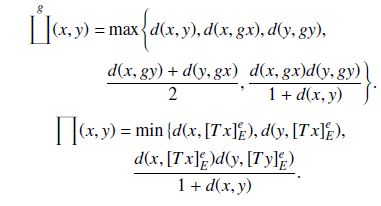
The mathematical treatment of uncertainty also extends beyond conventional probability theory. Many practical problems involve information that is imprecise, incomplete, or difficult to represent using sharply defined classifications. In On Fuzzy Soft Set-Valued Maps with Application, Mohammed investigates mathematical structures involving fuzzy soft set-valued mappings. Fuzzy soft set theory provides a framework for representing uncertainty through parameter-dependent descriptions and graded membership. The study contributes to the theoretical development of these structures and considers their application to problems involving uncertain information. Research in this direction remains relevant to mathematical decision theory and other areas in which precise classification may not adequately represent available information.
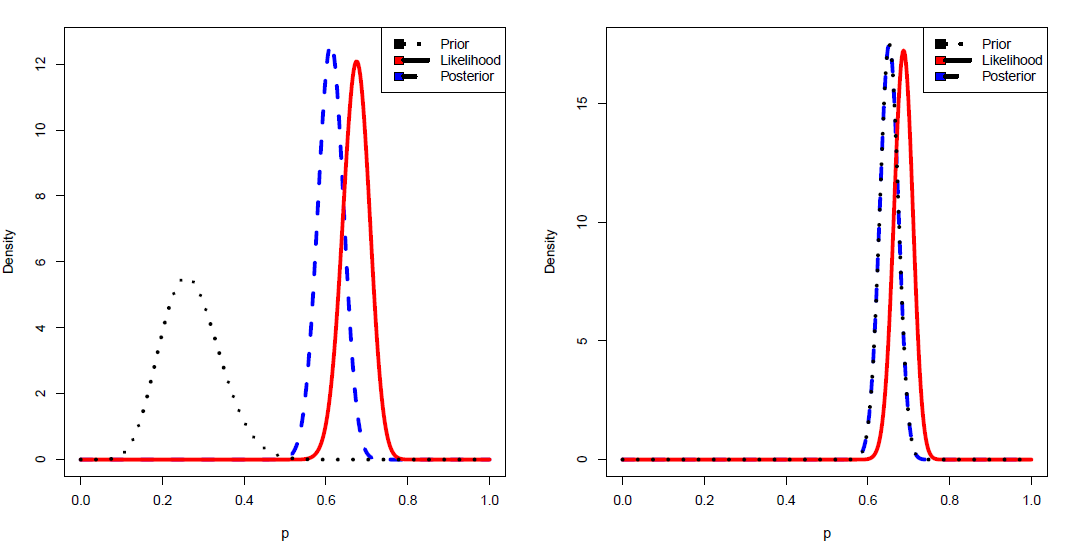
Statistical inference presents another important dimension of uncertainty, particularly when the information being collected concerns sensitive personal characteristics or behaviour. Respondents may be unwilling to provide truthful answers when direct questioning could expose private information. Randomised response techniques were developed to address this difficulty by introducing controlled randomness into survey procedures. Adeniran and colleagues, in A Modifed Forced Randomized Response Model, propose a modification of the forced randomised response approach for estimating the proportion of individuals belonging to a sensitive population group. The contribution highlights the role of statistical methodology in obtaining useful population estimates while reducing the risks associated with direct disclosure of sensitive information.
Numerical analysis remains equally important when differential equations arise from physical, engineering, or other mathematical models. The performance of a numerical solver depends not only on its formal order of accuracy but also on its suitability for the behaviour of the underlying solution. In Exponentially Fitted Chebyshev Based Algorithm as Second Order Initial Value Solver, Adeyefa and Esan develop a numerical integration approach based on exponential fitting and Chebyshev techniques for second-order initial value problems. The study contributes to the design of numerical algorithms intended to approximate solutions of differential equations. Such investigations are essential to the broader development of computational mathematics because the reliability of numerical predictions depends on the properties of the methods used to obtain them.
The issue also includes Preparation and Characterization of High Performance Dye Sensitized Solar Cells with Silver Nanoparticles in nanocomposite Photoanode, by Danladi, Tasiu and Endas. The article addresses the use of silver nanoparticles in nanocomposite photoanodes for dye-sensitised solar cells, an area of materials research concerned with light absorption, charge transport, and photovoltaic energy conversion. Experimental characterisation is particularly important in this field because conclusions about device behaviour depend on reliable identification of material properties and structures.
The research presented in this issue points towards a broader observation: the development of mathematical techniques and the advancement of experimental science are closely connected through the demand for reliable evidence. Mathematical models require clearly stated assumptions and valid derivations. Numerical algorithms must be assessed for accuracy, stability, and convergence. Statistical methods must account for uncertainty and the limitations of collected data. Experimental investigations, in turn, require dependable measurements and appropriate characterisation procedures. Although the methods differ across disciplines, the underlying demand for reproducibility and scientific validity remains the same.
As JNSPS enters its second year, our editorial responsibility is to ensure that these principles are reflected in the assessment of submitted manuscripts. A scientifically meaningful contribution need not address a fashionable topic or employ an unnecessarily complicated method. Its value should be determined by the importance of the problem, the soundness of the investigation, and the knowledge gained from the results. We shall continue to encourage studies that develop new theoretical approaches, improve established methodologies, or provide credible scientific evidence relevant to existing research questions.
The experience gained during the journal's inaugural year has also reinforced the importance of a constructive relationship among authors, reviewers, and editors. Peer review should provide an independent assessment of the validity and significance of research while helping authors identify weaknesses that may affect the clarity or reliability of their work. Editorial decisions must remain fair, consistent, and guided by scientific considerations. Maintaining these standards is essential to earning the confidence of the research community.
Our ambition for the second volume is therefore not merely to increase the number of published articles. Greater importance must be placed on strengthening the quality of submissions, improving the efficiency of editorial procedures, and extending the journal's engagement with researchers across different scientific disciplines. A journal develops its reputation through consistent scholarly practice, and that reputation must be earned through the quality of the research it publishes.
I appreciate the authors who have contributed to this issue and the reviewers whose assessments have supported the editorial process. I also acknowledge the dedication of the editorial team and the continued support of the Nigerian Society of Physical Sciences. Their contributions remain important as we work towards the development of a sustainable and internationally respected scientific publication.
The beginning of Volume 2 represents another opportunity to strengthen our commitment to rigorous scientific investigation. I hope that the studies published in this issue will stimulate further research, encourage critical discussion, and contribute meaningfully to the advancement of knowledge across the scientific community.
B. J. Falaye
Editor-in-Chief, Journal of the Nigerian Society of Physical Sciences
February 28, 2020
Original Research
-
 1498 909 Cited —
One of the major problems faced in the management of pension funds and plan is how to allocate and control the future flow of contribution likewise the proportion of portfolio value and investments in …
-
 1476 109 Cited —
This article has been retracted by the Editor and Publisher of the Journal of the Nigerian Society of Physical Sciences: T. Jamila, E. Lucky, and D. Eli, “Preparation and Characterization of High …
-
 1218 832 Cited —
This article constructed and implemented a family of a third derivative trigonometric fitted method of order k+3 whose coefficients are functions of frequency and step size for the integration of systems …
-
 1424 820 Cited —
Soft set and fuzzy soft set theories are proposed as mathematical tools for dealing with uncertainties. There has been tremendous progress concerning the extensions of these theories from different point …
-
 1680 1559 Cited —
In this paper, we proposed a new Randomized Response Model (RRM) that estimate proportion of people in a population (P) belonging to a sensitive group (S) under study. Simple random sampling with …
-
 1335 852 Cited —
In this research work, we focus on development of a numerical algorithm which is well suited as integrator of initial value problems of order two. Exponential function is fitted into the Chebyshev …